


How to Choose Women's Ski Boots by Fit and Support
When choosing women's ski boots, consider foot shape, cuff, and skiing style. Compare length, last, instep, and heel hold before letting flex rating or closure system be the deciding factor. This guide shows you what questions are important during fitting and how to consider ski socks, inner boot, and the technical connection to your binding together.




Choosing Women's Ski Boots Based on Foot Shape and Skiing Style
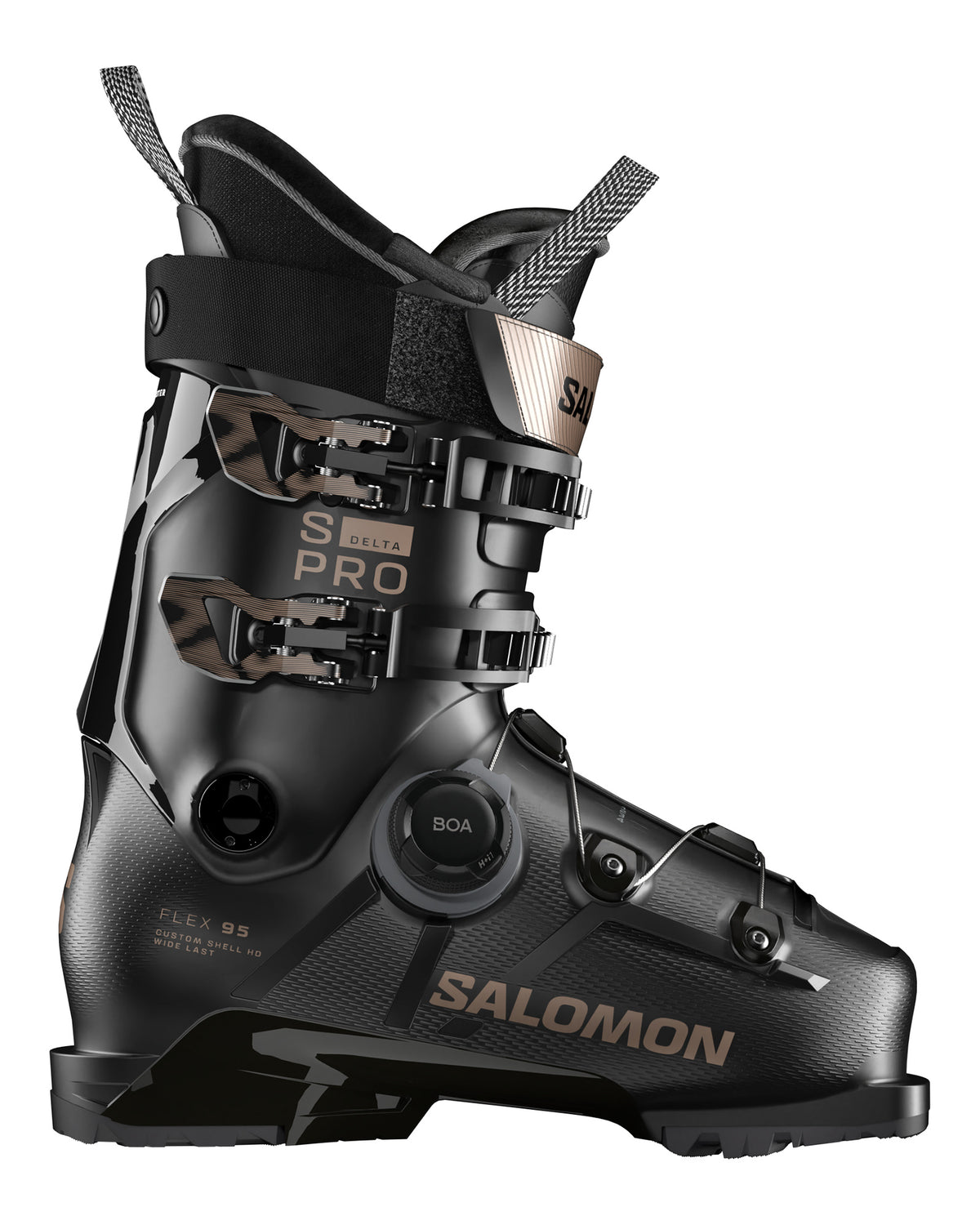
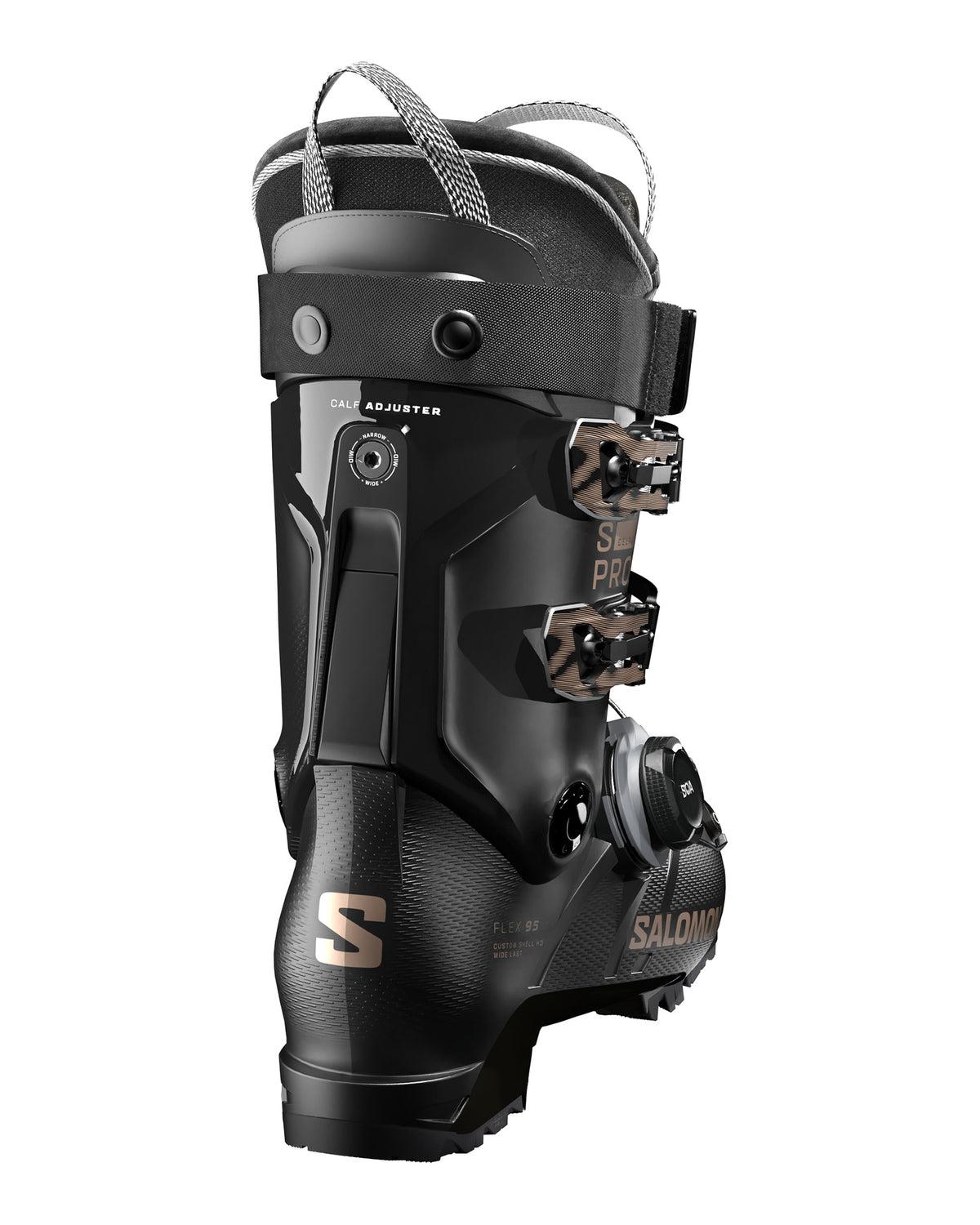
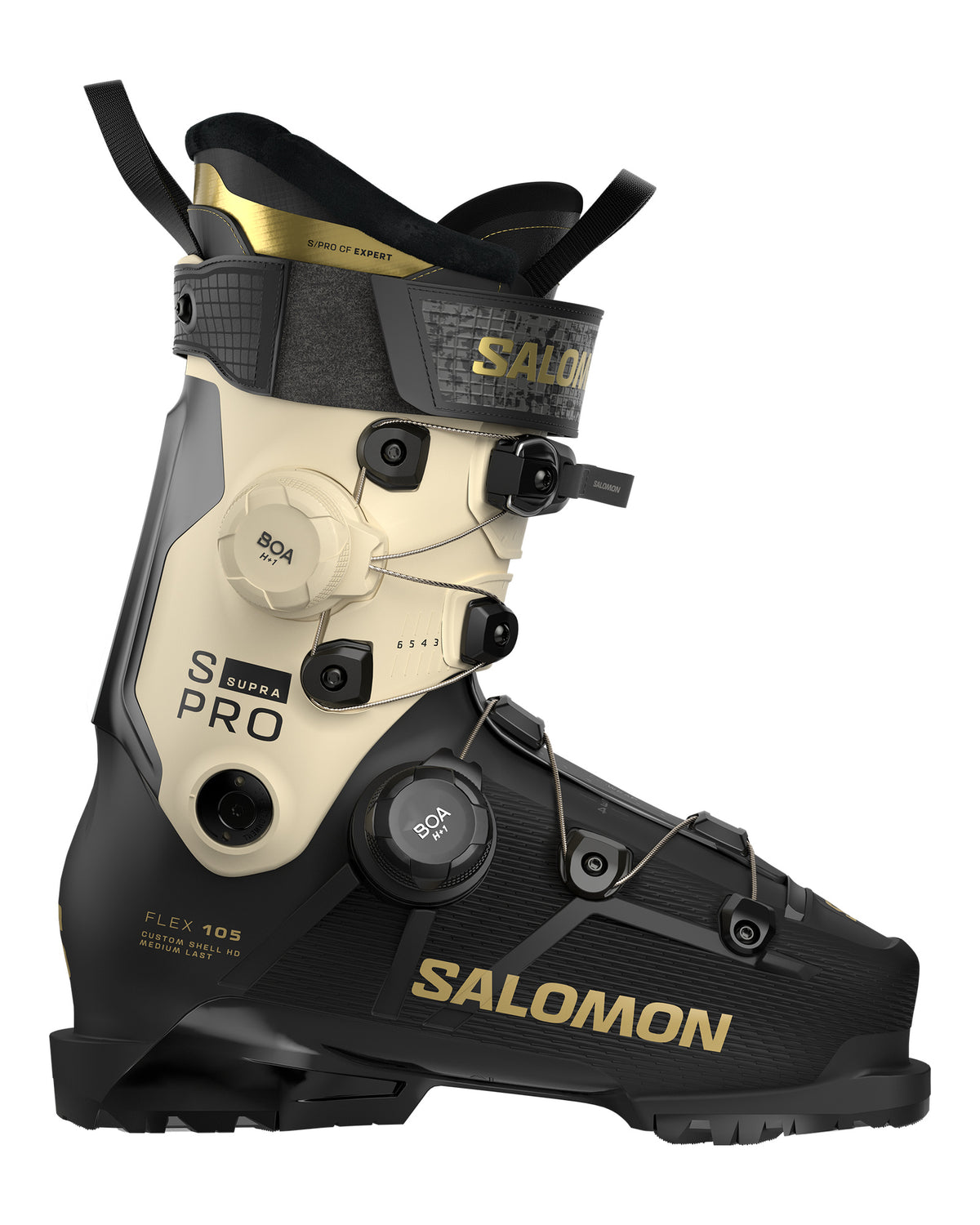
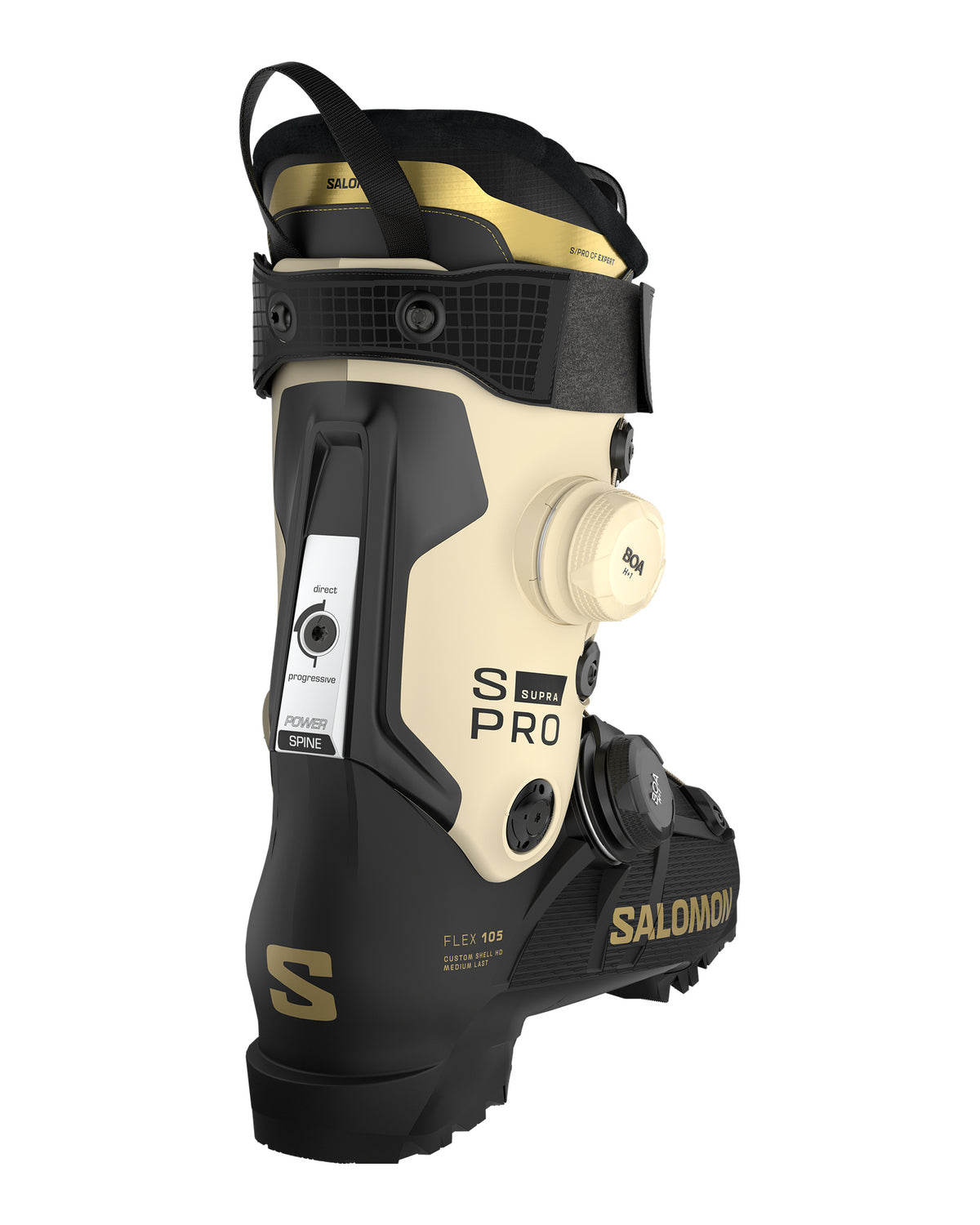
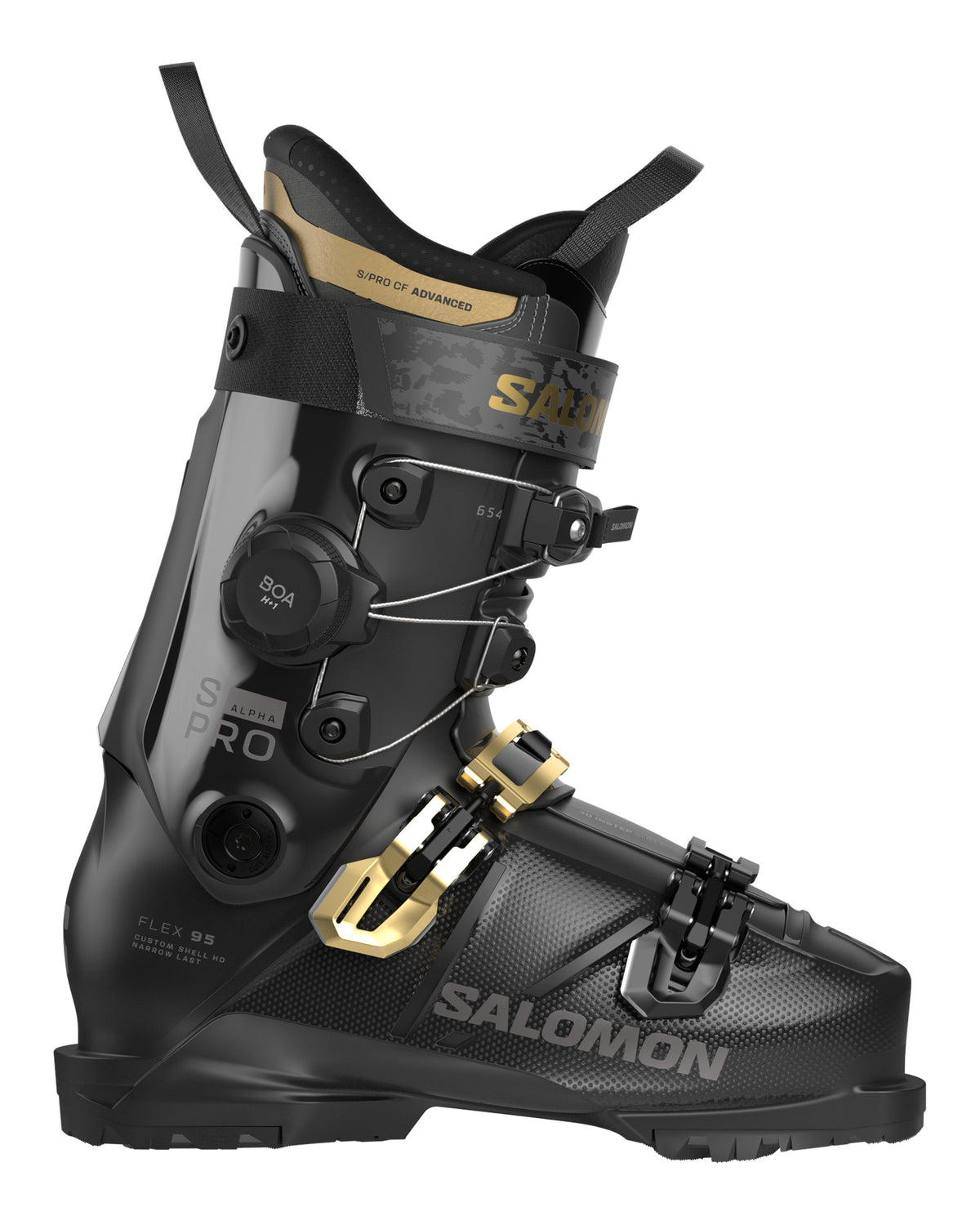
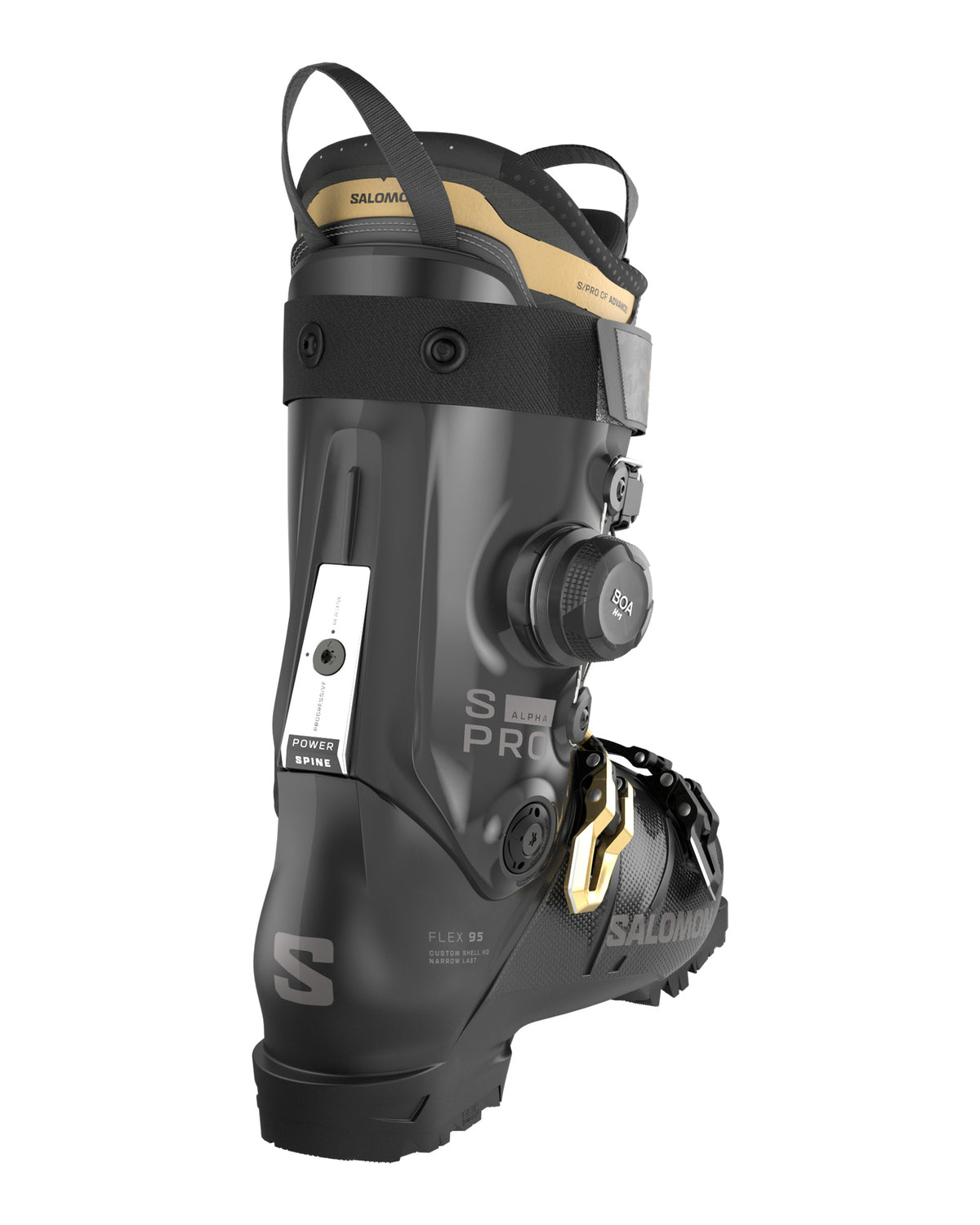
A women's ski boot is the direct connection between your foot and the ski. Therefore, the first question is what shape provides support and simultaneously matches your movement. The outer color, a well-known model series, or a high flex rating cannot replace this fit. First, compare how the boot is constructed in the forefoot, instep, heel, and calf. Only then can its other features be meaningfully evaluated.
Also, describe how you ski. Do you prefer relaxed descents, varied turns, or a sporty style with significant pressure on the ski? How does your current boot feel when you do this? Such observations provide more concrete clues than a self-assessment that sounds as ambitious as possible. The goal is a boot that you can move appropriately and whose support works with your demands.
The "Women's" Designation is a Starting Point, Not a Fit Promise
Manufacturers may design women's models with a specific cuff shape, cuff height, or different liner, among other things. It does not follow that all women have the same foot or calf shape. A pair designated as a women's model might offer too much or too little volume for you. Likewise, the classification alone says nothing about which stiffness or last suits your individual needs.
Pay attention to the specific construction of the chosen model. How high does the cuff reach? Where does its upper edge rest on the calf? Are there intended adjustment options for this area? The answers differ between models. If you want to replace a previously uncomfortable boot, pinpoint the exact location and situation of the problem. A general search for a softer or larger women's model would be too imprecise for this.
Understanding Mondopoint as the Basis for Size Selection
Ski boots often use the Mondopoint system, which refers to foot length. Use this measurement basis and the manufacturer's size chart instead of transferring your usual sneaker size unchecked. Both feet should be compared, as they can differ. Careful measurement provides a starting point for trying on, but does not replace evaluating the entire boot volume.
A longer shell is not a general solution for pressure at a single point. It also changes the space in other areas. If the heel is then held less securely, the original conflict may only have been shifted. Therefore, distinguish between the length, width, and height of the footwell. These dimensions help you to specifically compare different models, instead of exclusively switching between two adjacent sizes.
Considering Last Width and Internal Volume Together
The last specification describes part of the fit. However, it does not fully explain how much space a boot offers at the instep, ankles, or heel. Two models with similar last specifications can therefore feel different. Furthermore, a measurement always belongs to its reference size and the manufacturer's description. Treat it as a guide for selection, not as a complete representation of your foot.
Ask specific questions when comparing: Is the forefoot stable without being constricted laterally? Is there sufficient space at the instep while the heel remains clearly guided? Can you close the boot properly without having to excessively compress individual areas? The right shape arises from this interplay. A particularly wide boot is not automatically comfortable if you have to close it disproportionately tight for the necessary support.
A Narrow Boot as a Concrete Construction Example
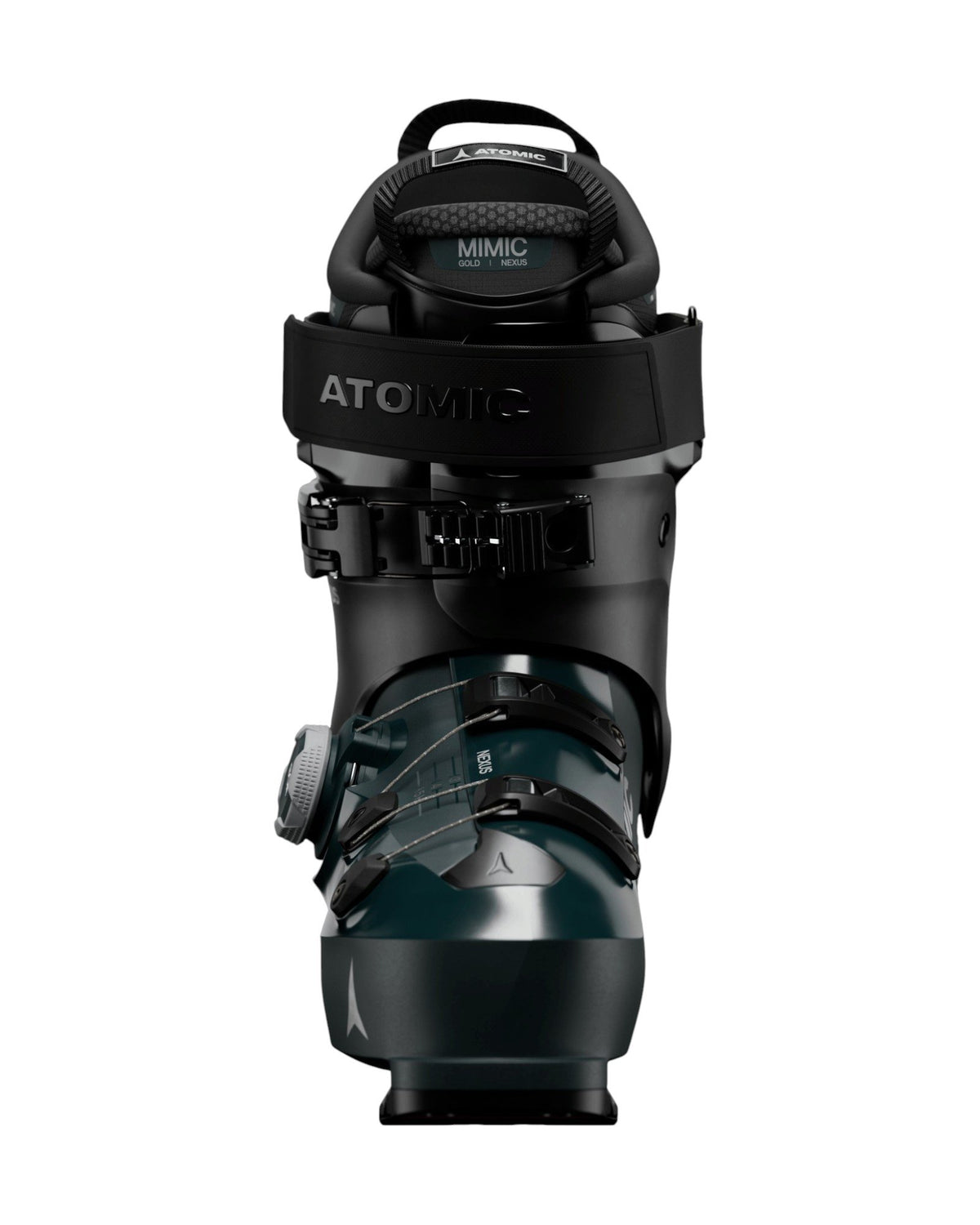
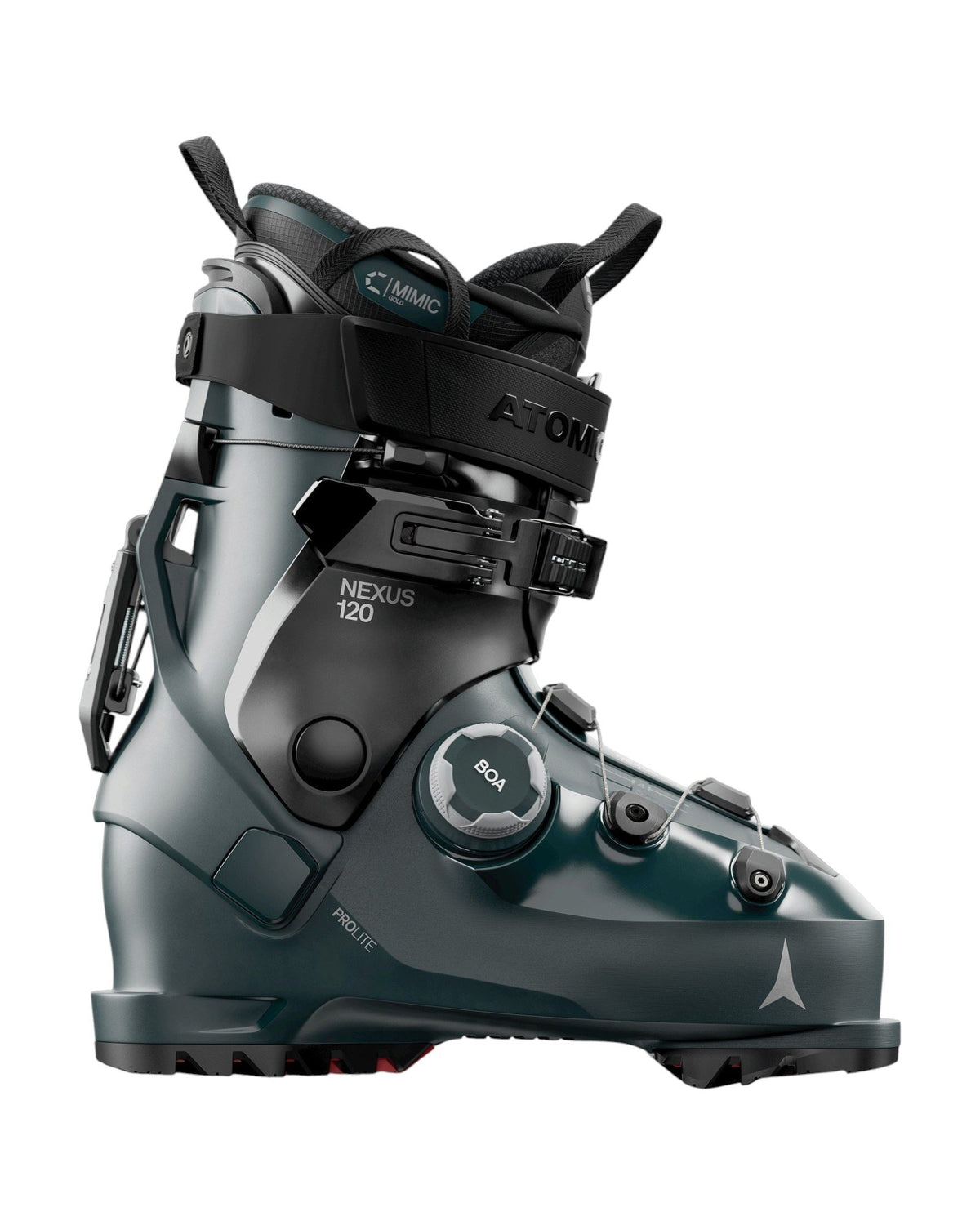
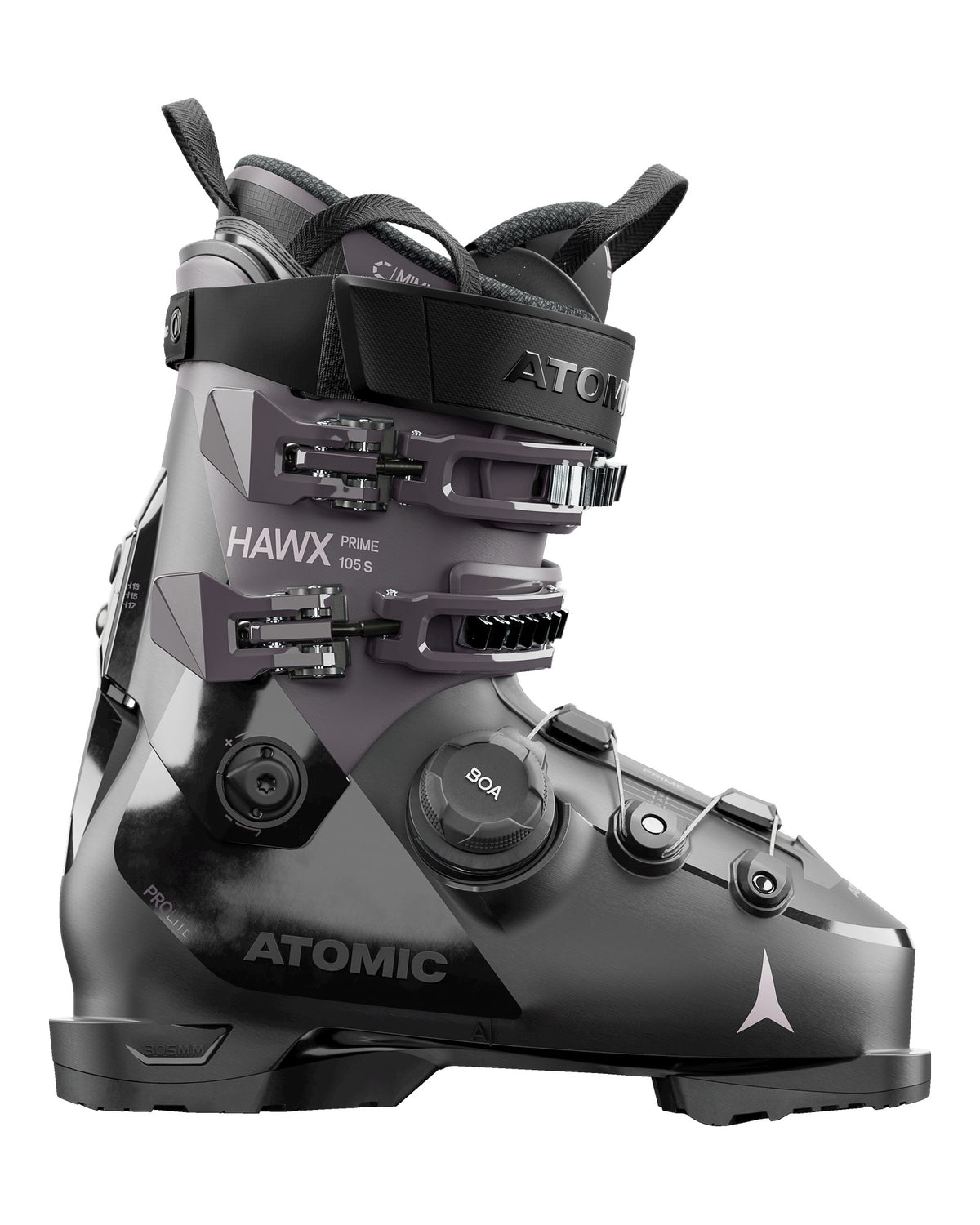
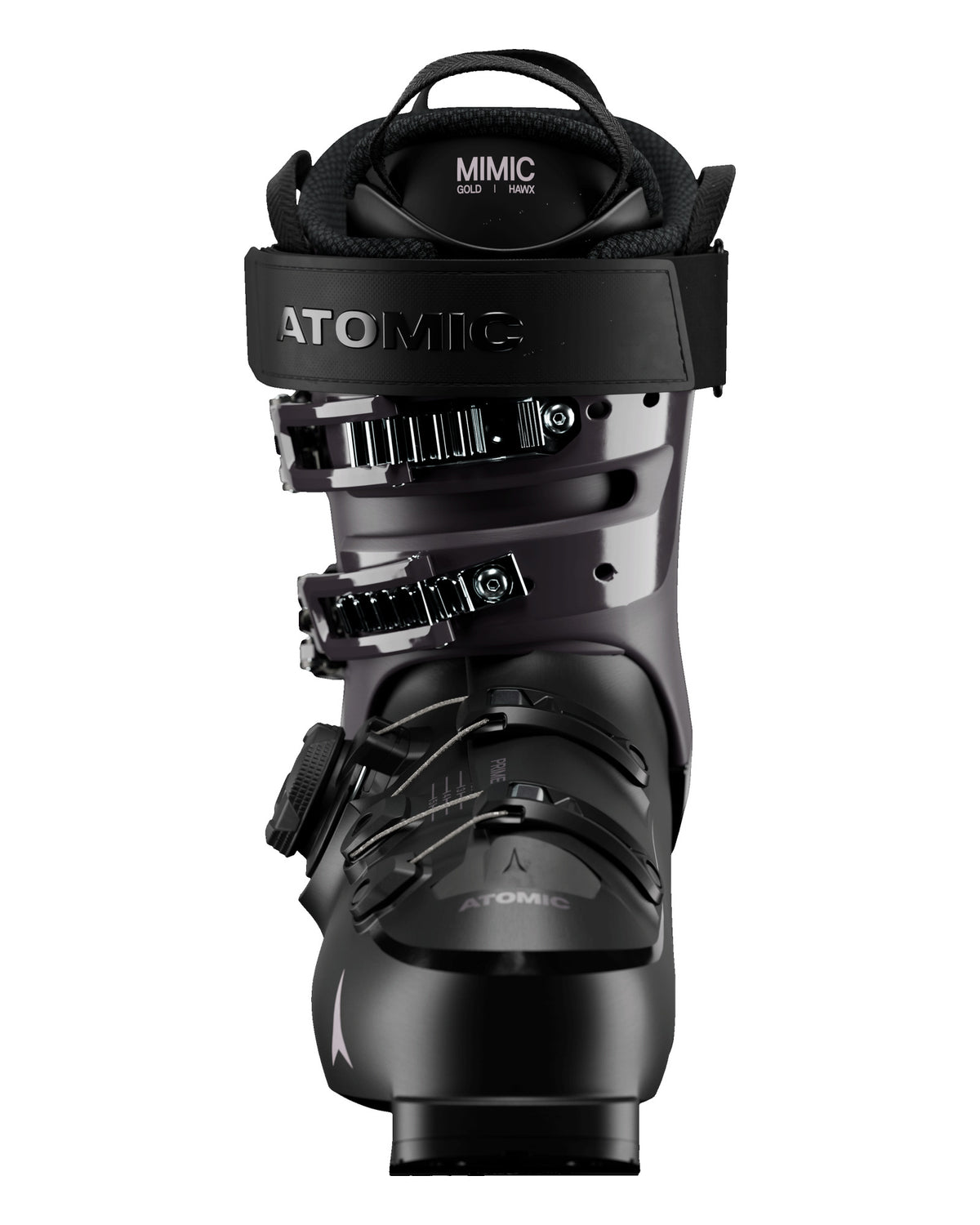
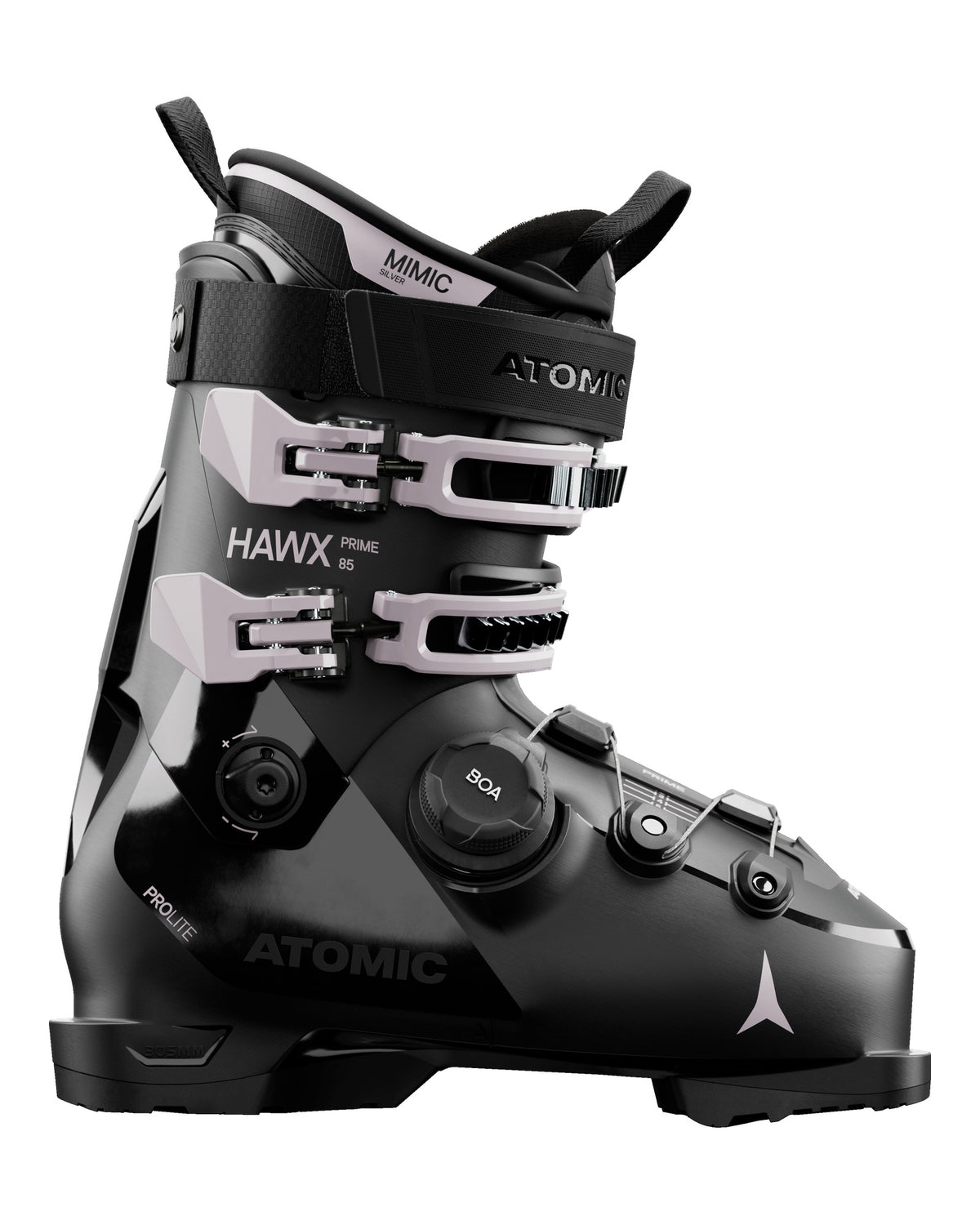
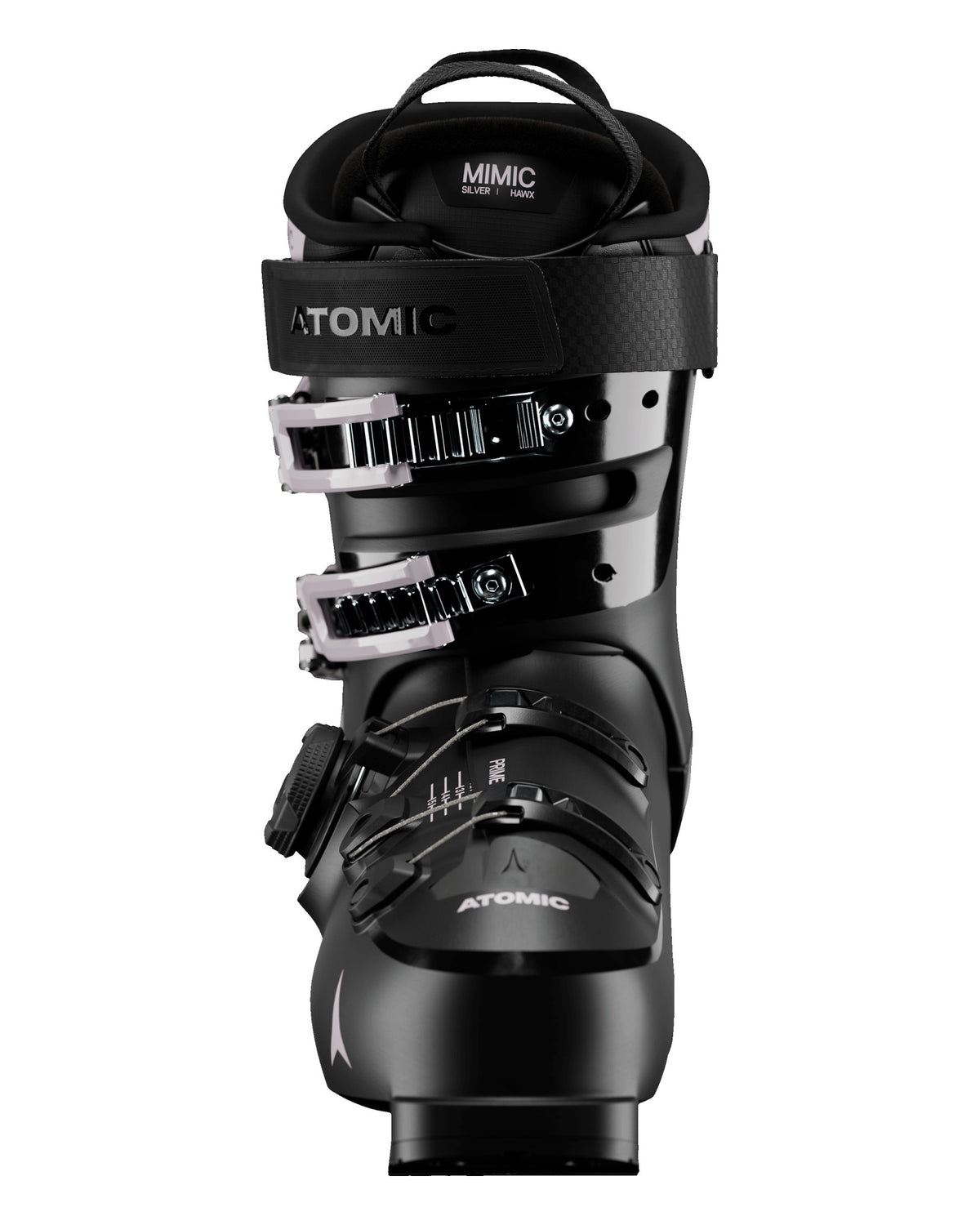
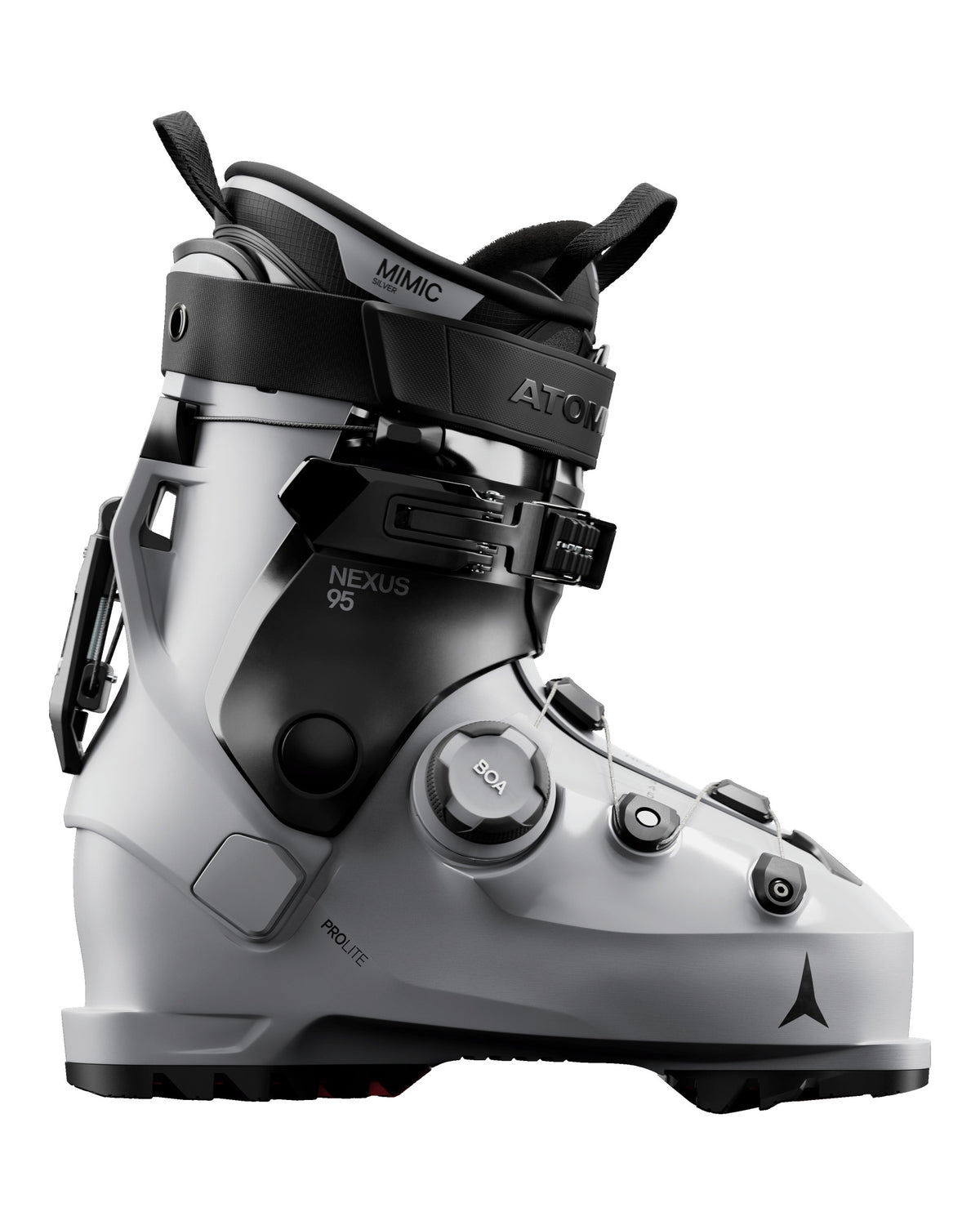
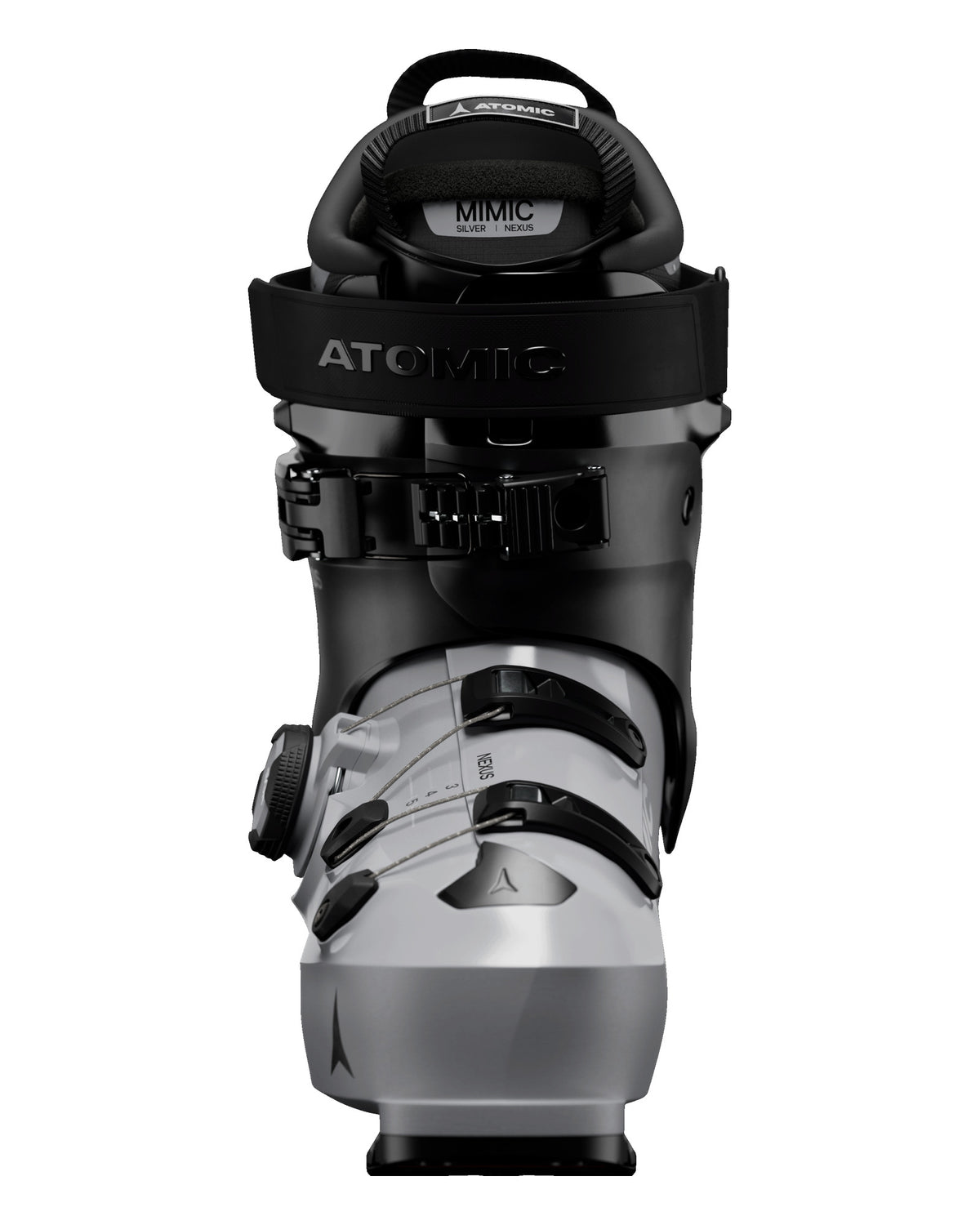
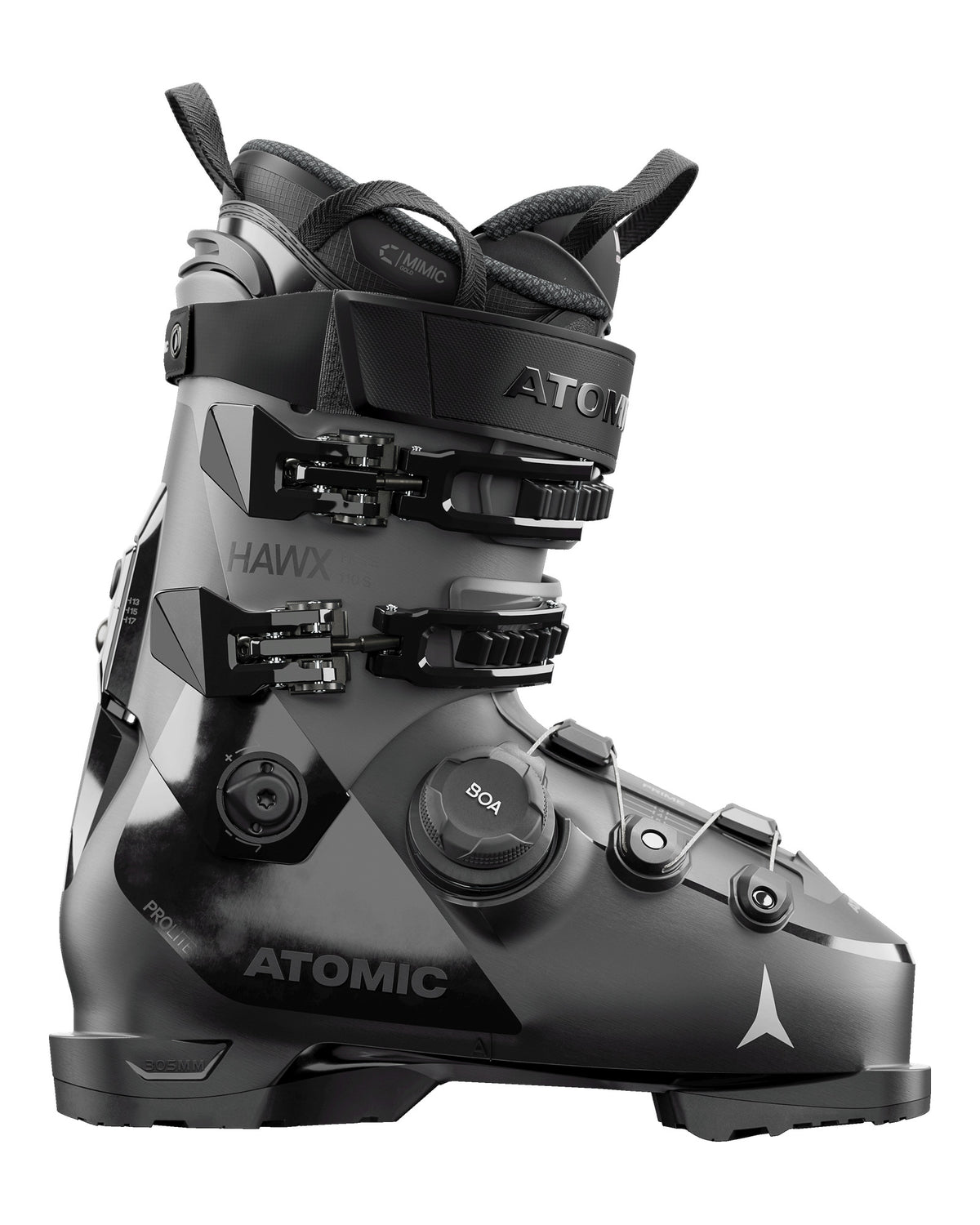
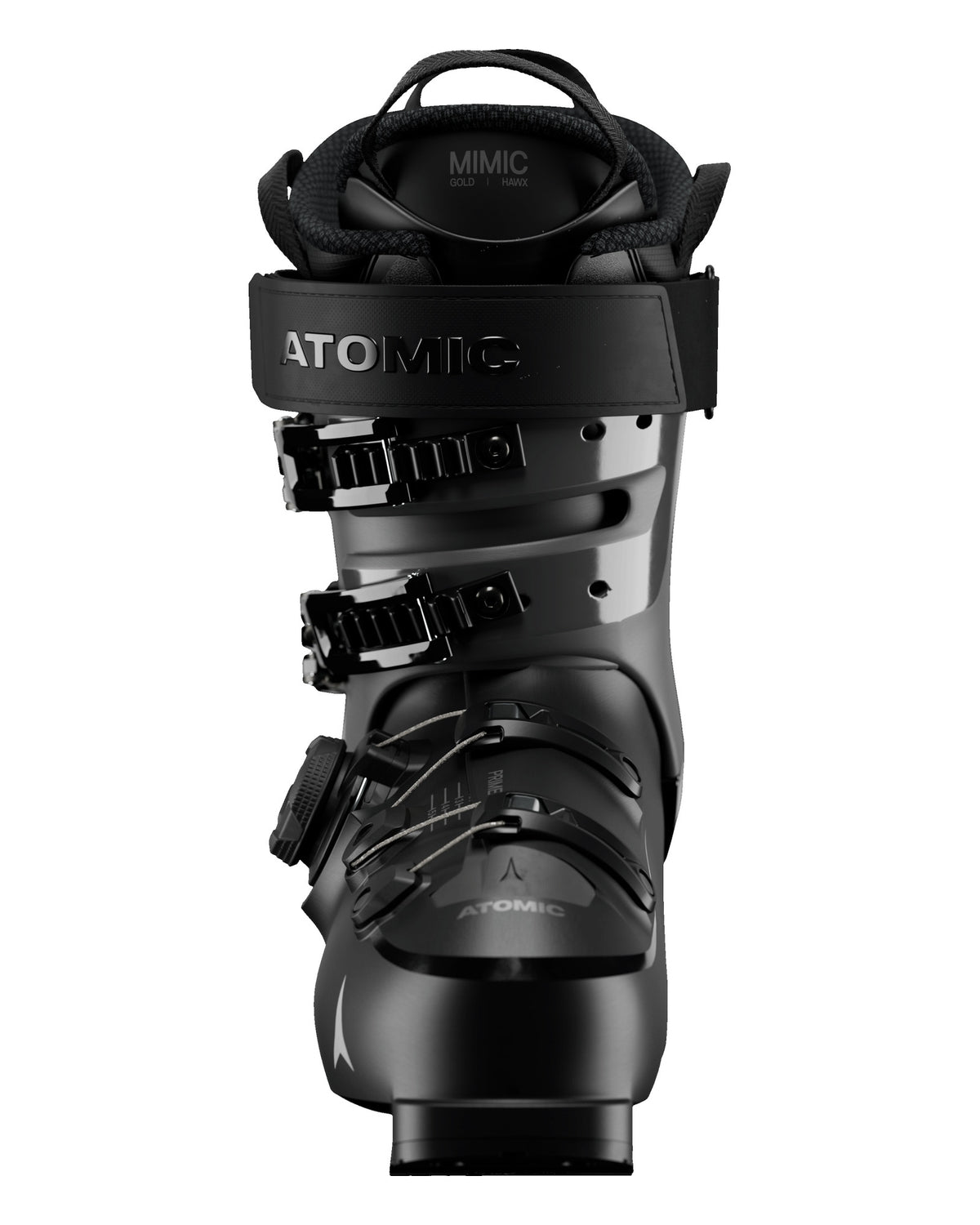
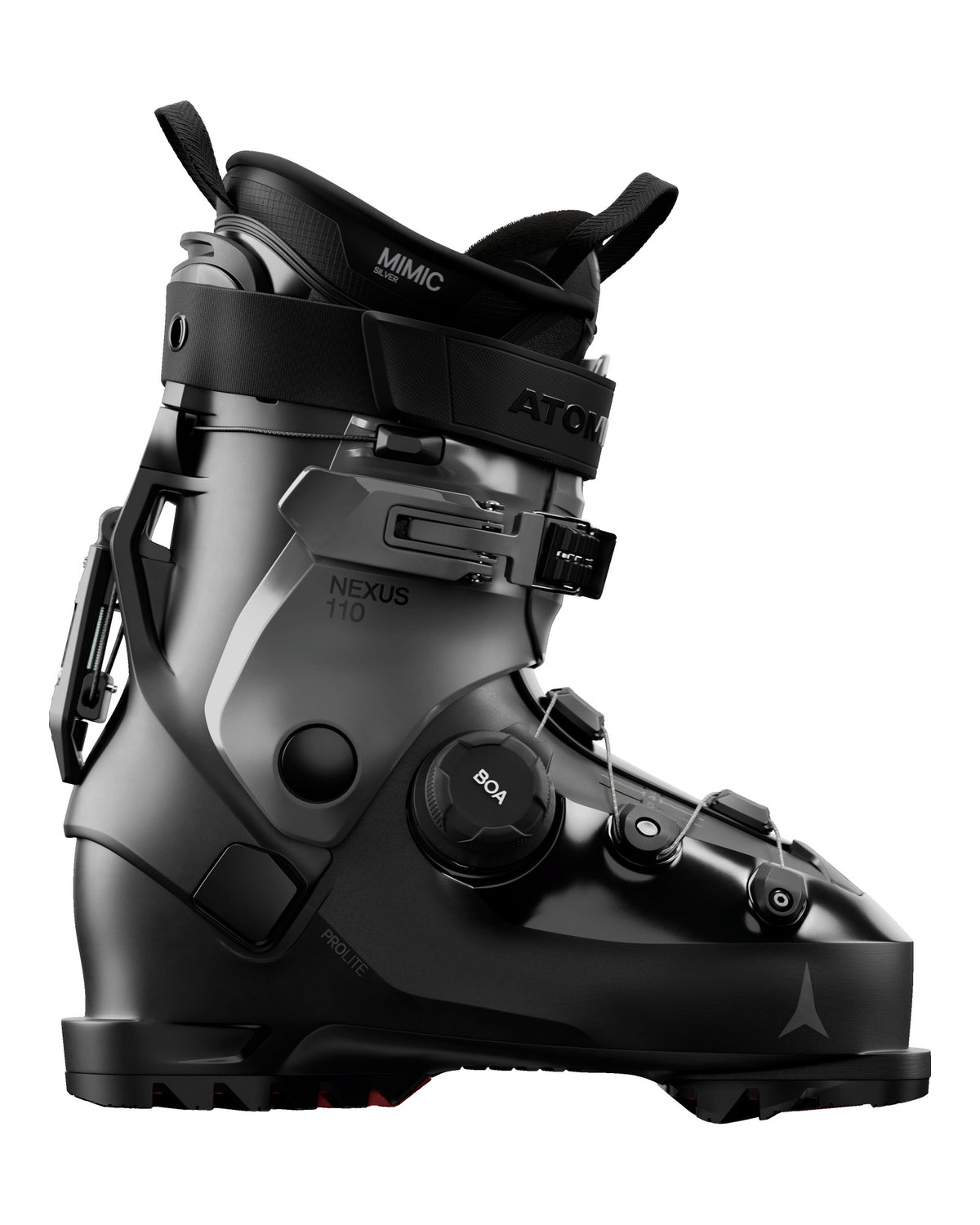
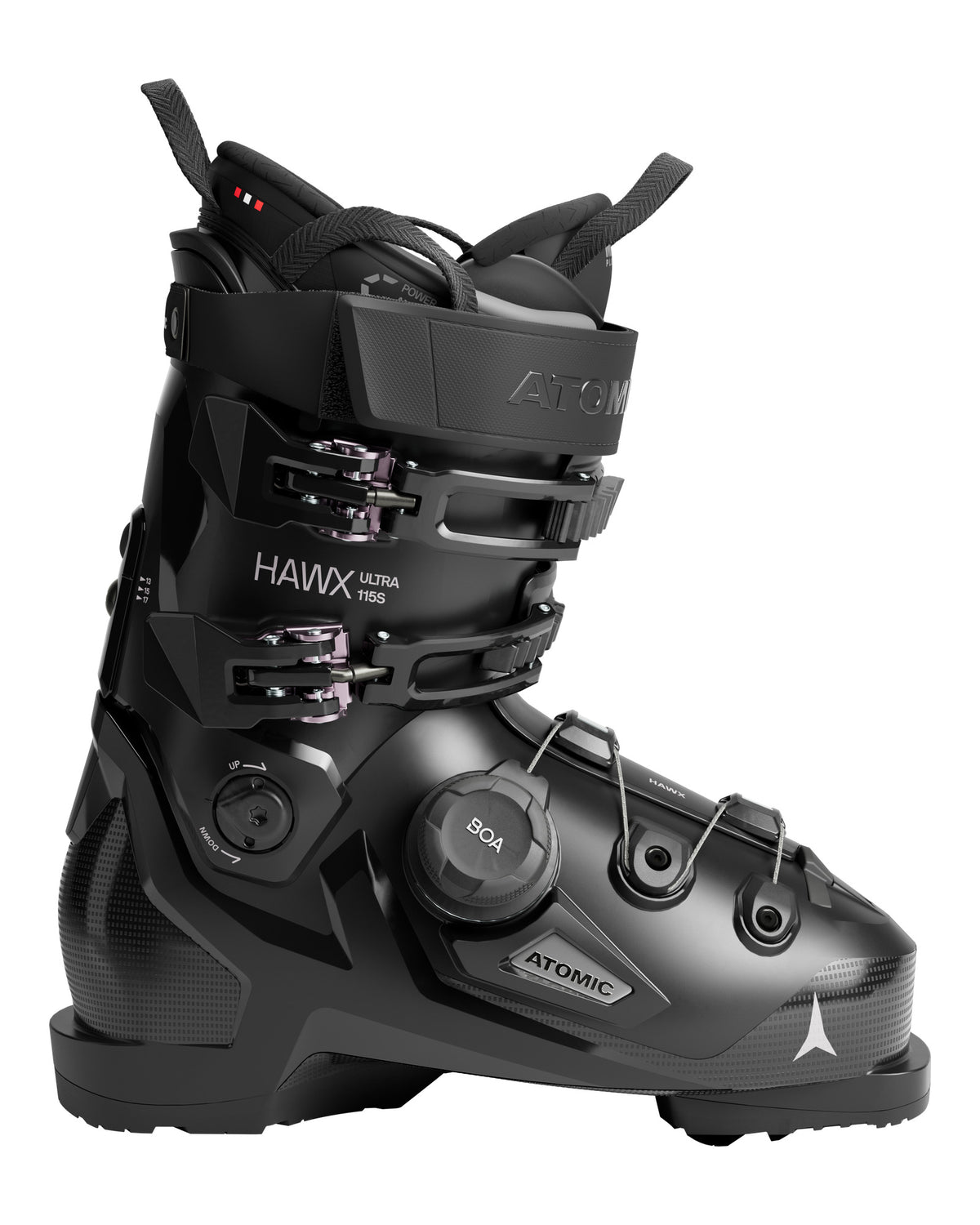
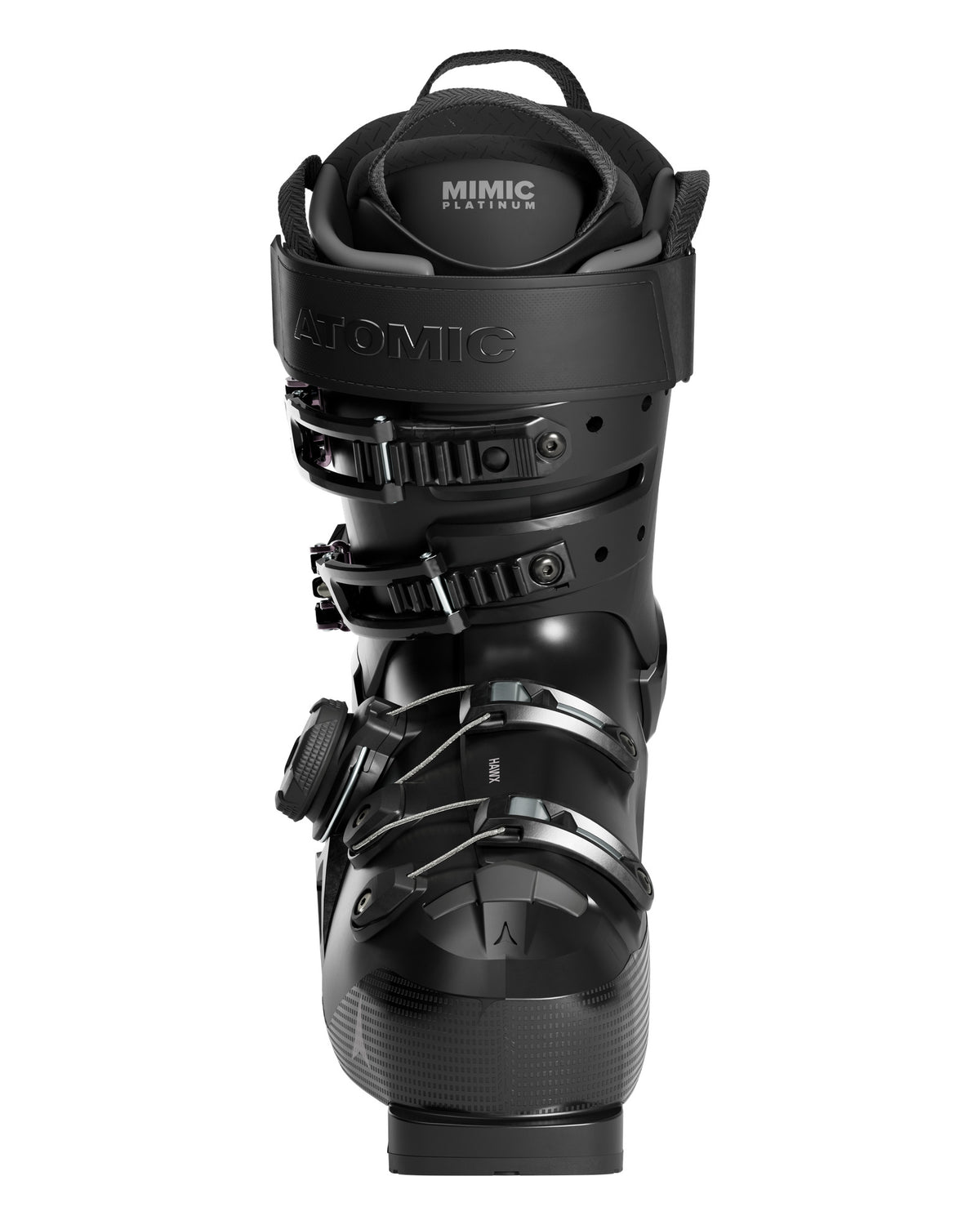
Atomic describes the Hawx Ultra 115 S BOA W as a women's ski boot with a narrow last and low volume. The model features a BOA closure on the foot and a liner designed for customization. This example shows why the model name and exact specifications are important: A boot from a narrow product line pursues a different fit concept than a deliberately more generous design.
This does not constitute a recommendation for every female skier with a seemingly narrow foot. The instep, heel, and calf must also fit, and the support must match your skiing style. Compare the concept with your actual needs. At Atomic, you can further classify the brand world; concrete sizes, features, and variants remain a decision for the respective product.
Classifying Flex as Support and Resistance to Movement
The flex rating serves as a guide for the stiffness of a ski boot. However, it is not a uniformly standardized comparison across all brands and models. A higher value therefore does not automatically mean a better boot for you. What is important is how the construction can be combined with your physique, your skill level, and your skiing style. A general number for all female skiers would not reflect this relationship.
Instead, describe what support you are looking for. If you can barely move a boot forward meaningfully, its stiffness may not match your requirements. If you lack clear support under athletic stress, a different construction should be considered. These observations belong in an expert comparison. A self-calculated flex formula does not replace trying on the boot and assessing the specific model.
Comparing Buckles and BOA for Handling
Classic buckles and BOA systems organize the closure differently. On the Atomic model mentioned, the tension at the foot can be finely adjusted via a dial. Other constructions distribute the closure points in different ways. What is crucial is how the boot in question encloses your foot and how intuitively its intended areas can be operated. The name of the closure system alone does not explain the entire fit.
Try on the boot at your leisure according to the manufacturer's instructions. Pay attention to whether you can easily reach the intended controls and whether the fit can be adjusted in a controlled manner. A system should complement a suitable basic shape. It is not a way to arbitrarily modify a significantly ill-fitting last. Therefore, first compare the foot area and then decide which closure you prefer in that suitable shape.
Cuff and Calf Deserve Their Own Examination
The upper boot area influences how your lower leg feels in the ski boot. An uncomfortable cuff closure can exist even if the foot length is correctly chosen. Pay attention to where the cuff ends and how its circumference can be closed in the intended area. The boot should be assessed not only in an upright stance, but also in a typical skiing posture.
Additional layers of fabric can alter this area. For trying on, choose appropriate ski socks and avoid unwanted wrinkles or multiple overlapping layers in the cuff. Long underwear does not necessarily have to extend into the boot; its length is part of the overall combination. This makes it easier to distinguish whether an uncomfortable spot comes from the boot or from the clothing underneath.
Distinguishing Between Liner and Intended Customization
The liner shapes the initial wearing sensation and works together with the shell. Some models have expressly described customization options. However, this does not mean that every fit issue can be arbitrarily resolved afterward. Inform yourself about which parts of the specific boot are intended for which process. The most sensible starting point remains a fundamentally suitable construction whose properties match your foot and your use.
Do not modify the shell, liner, or sole according to general instructions. Heat molding and other adjustments depend on the model and should be performed by experts. When seeking advice, precise information about where you feel pressure, movement, or lack of support is helpful. Describe the spot as precisely as possible and distinguish between both feet. This is more helpful than a general statement that the boot feels too tight overall.
Checking Sole and Binding as a Concrete Connection
The underside of the ski boot is part of a technical system with the binding. A GripWalk sole requires a suitable binding; visual similarity or the same brand is not sufficient proof. Even a fundamentally compatible system must be expertly adjusted, checked, and maintained. A new boot choice should therefore always be considered in conjunction with the exact designation of your existing binding.
For this comparison, note the model and version of your equipment. The general category ski boots delves into the overall selection, while here the individual women's fit is the focus. A walking comfort feature also does not automatically mean that a boot is suitable for touring bindings or any other use. Clarify the specific approval before using components together; self-made binding adjustments are not part of the boot selection.
Preparing the Try-On as a Comprehensive Comparison
Bring your intended ski socks and information about your existing equipment. If you are replacing an old ski boot, its exact designation and your experiences with it can be helpful. Don't just describe problems. Also explain when they occur and whether both feet are equally affected. What has worked well so far also narrows down the search: heel hold, a comfortable cuff closure, or the handling of the closure can remain important points of comparison.
Compare favorites in the same way. Pay attention to both feet, take enough time to feel them, and test the boot in motion. Don't just evaluate which pair feels softest immediately. Support and appropriate assistance are equally part of the decision. Your notes make differences tangible and prevent only color or model name from remaining in memory after several try-ons.
Making the Right Choice with a Clear Priority
Start with length and basic shape, then check the heel, instep, and calf area, and then classify support and closure. The technical connection with your binding is an essential final step. If you are also putting together an outfit, you will find suitable options for the outer layer with women's ski pants. The pant cuff must work with the boot without overloading its shaft.
A good women's ski boot choice can be concretely justified: suitable shape, understandable support, and a tested interaction with your equipment. You don't need the highest number on the shell or as many feature names as possible for this. More important is a model whose construction suits you and whose differences you can actually understand in comparison.
04At FREUDENHAUS
05Questions about the category